Design
Five realistic New Year’s resolutions for designers
Written for The Next Web
Last year, I left my job at ZURB, a renowned product design agency, with nothing lined up.
I had no idea where I was going next. All I knew was it was time to begin a new chapter.
At the time, the unknown was frightening. But after much reflection, it was the best decision for my career as a designer. In those months of being unemployed, there were five key things that kept opening new opportunities for me and helped me become a better designer.
These five items remain on my New Year’s resolutions list. I hope they serve you just as well.
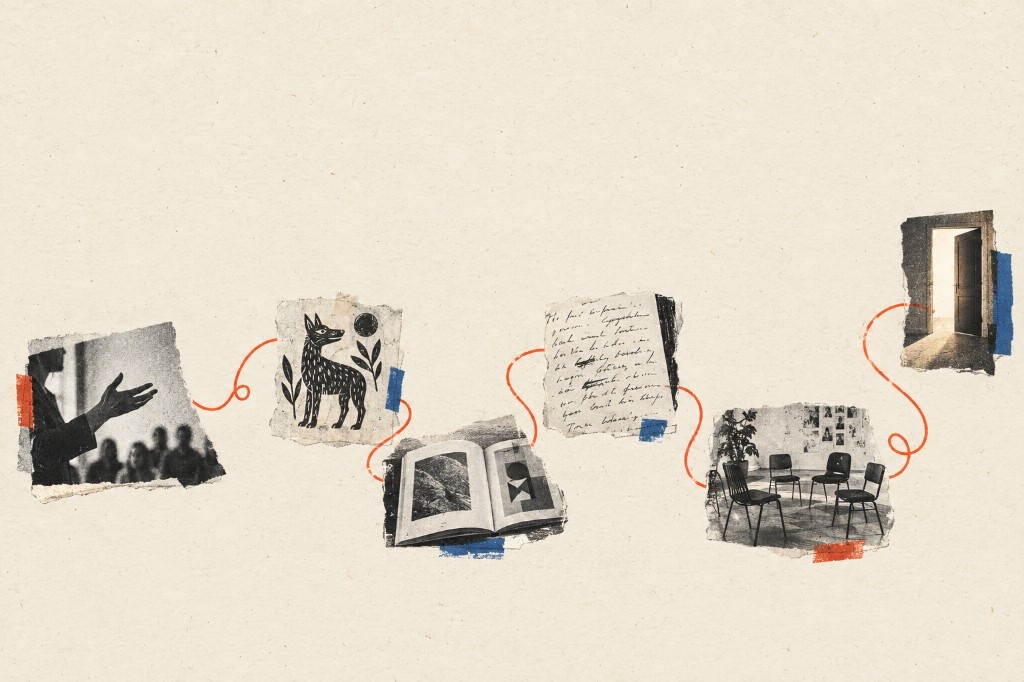
1. Teach someone something about design
I ran into my ex-coworker at a Foundation meetup a month after my unemployment.
When I mentioned I was visiting New York for a few days, he pointed me toward a Design First meetup where they were looking for someone to speak about prototyping. Immediately, I jumped at the opportunity because I was getting too comfortable with not having to work. I needed to get outside of my comfort zone by exercising my public speaking and storytelling skills.
The day came. I spoke nervously about product design to over 80 people. I knew I wasn’t ready. I knew I made a fool of myself with shaking knees and a trembling voice. But I did it, and my design confidence spiked.
You learn by teaching. You learn by answering questions, by sharing the resources and methods you use, by providing feedback, by sharing your own experiences. By teaching, you will become a better designer.
Teaching comes in all sorts of formats — speaking at a meetup about your process, hosting a lunch-and-learn at work, teaching a UI or UX course, coordinating a design thinking workshop. Aside from the networking, you might also find a mentor. And the more people you educate, the more UX advocates you create.
Teaching others about design skill sets and mindsets directly benefits your own work. You can articulate your ideas better (which leads to more productive feedback), and you improve your patience (which helps when working with stubborn stakeholders).
2. Start and commit to your side project
On a flight home from New York a few months ago, I started doodling. This little exercise began opening up my interest in drawing.
And as an admirer of works by Alice Lee and Jessica Hische, I was quite interested in drawing letters. But being a full-time product designer meant I rarely had the opportunity to draw.
So I took my unemployment as an opportunity to explore my drawing skills once again. I drew one letter, posted it on Instagram, friends loved it, and they motivated me to complete the rest of the alphabet — thus becoming my side project.
It was a hand-lettering project, illustrating animals in alphabets. After several months of commitment, I finally finished all 26 letters. On top of that, I practiced some basic HTML and CSS skills to create a page to showcase the work.
Starting a side project isn’t just a way to kill time. It is a powerful way to explore your passion, experiment with different ideas, pick up new skills, and develop your own aesthetic style as a stronger designer.
While drawing letters differs from sketching product ideas and UX workflows, the techniques certainly transfer over. You learn to visualize in layers, carve shapes from blank spaces, and add in the details methodically. When you return to UX sketching, you might find that your wireframes are cleaner and easier to explain to stakeholders.
Of course, your side project could be anything. Just find something you are interested in doing and commit — an Etsy shop, a children’s book, an open-source contribution, volunteer work for a nonprofit, your own typeface. The form matters less than the follow-through.
3. Immerse yourself with more design books
While working on those animal letters on the side, I was introduced to an opportunity at the Sequoia Creative Lab. I applied as a visiting designer and got the gig.
Deep down, I knew it was my side project that landed me this amazing opportunity to work with Head of Content and Design, James Buckhouse.
On the first day as a visiting designer, I noticed the lab was filled with design books. James excitedly shared with me the different types of books he had, from Sagmeister to Mendelsund to Bringhurst. After working with him for a month and seeing some of his own works, I was simply fascinated with his skills and creative mind. James immerses himself in all things art and design, especially in books. He was always reading.
Inspired, I decided to spoil myself with some books. The three that I added to my library were:
- The World of Ornament by David Batterham
- Less and More: The Design Ethos of Dieter Rams by Klaus Klemp
- Oriental Flowers: Chinese Brush Paintings by Sufan Cai
Since traveling is one of my greatest passions, I’m fascinated with the different motifs and patterns from all around the world. I also admire the works and principles of German designer Dieter Rams, who inspired many of the Apple design principles.
Lastly, I’m simply in awe of Chinese painting; there is just something about it that is so simple and free-flowing, yet so complex. It reminds me of how user experience should be — simple and easy, but actually very complex to build.
These books may seem completely random, but all were very inspiring. They gave me a better understanding of designs from various cultures around the world and of other designers — their principles, processes, and methods.
We’ve all heard the phrase, “You are what you eat.” If you want to become a better designer, simply consume more design books. Be inspired and enlightened. Learn from people, learn from their mistakes, learn from other cultures.
For product designers, a few favorite paperbacks:
- The Design of Everyday Things by Don Norman
- Don’t Make Me Think by Steve Krug
- Hooked: How to Build Habit-Forming Products by Nir Eyal
- Change by Design by Tim Brown
4. Write and reflect more on your design learnings
Even though I started to pick up a few freelance gigs like the Sequoia Creative Lab stint, I was getting discouraged.
I was stressed and insecure about not having a stable nine-to-five job. After months of interviewing with different companies, all I received were “you’re not a fit at the moment” messages. I started to doubt whether or not I was even good enough to be a designer.
I spent some time alone with my thoughts and reflected on what I did wrong and where I could improve. A few recurring themes kept coming up.
Evernote came out and I started writing about lessons learned while being unemployed. After I finished, I paired each lesson with illustrations and turned it into a microsite. I titled it Six Lessons from an Unemployed Designer and posted it on Designer News.
That week, emails and tweets poured in. Designers from around the world appreciated these humbling lessons and several were able to relate to them. Who knew writing about failures and feelings of discouragement ended up being a blessing?
Writing helps you become a better designer because you pause on doing. You reflect on your experiences and you learn from them. Not only that, you help other designers empathize, learn, and be inspired from your experiences.
From a practical standpoint, writing also helps you appreciate the power of content as a design element. As you write, you are essentially designing a story with text. When you return to your day job as a UI or UX designer, you’re better able to design an interface to express that type of narrative.
You could write about your humbling experiences, your case studies, your failures and assumptions, your process — whatever helps you make sense of the work.
5. Spend more time with your design family
Little did I know, my Six Lessons From an Unemployed Designer article would continue opening more doors for me.
In May, the founder of a design accelerator, Whitespace, reached out to me after coming across those six lessons. We introduced each other, I talked about what I was looking to do next, and he talked about Whitespace.
What got me excited about the program was that sense of design community and culture that I left behind at ZURB. I missed talking about rem vs. em vs. px, mobile-first vs. graceful degradation, hideous type crimes, different design tools, and more. I missed sharing resources and participating in design critiques with a group of creative minds.
So after much thought, I joined the 12-week program. Whitespace had paired me up with Zugata, an employee-centric, data-driven startup reimagining the performance review process.
Three days a week, I worked from the Zugata office and the other two days, I spent time with other Whitespace designers. Together, we did many rigorous group critiques and collaborative workshops tied to the projects at our paired startup.
The instructional team and the designers became the design community and the design support group I was searching for in my career path. At the end of the program, I had gained more experience — and a brand-new design family.
And on top of that, I became a full-time employee at Zugata as the founding designer.
Despite all the work required of the lone designer at an early-stage startup, I still find the time to attend Whitespace events and meetups. They are my design family. They inspire me, ground me, and help mentor my decisions.
Branch out, build relationships, spend time with other designers. Let them become your support group. They will inspire and support you to become a better designer.
If you haven’t found your design family quite yet, meetups, a design program like Whitespace or Bridge, an online group, or an organization like Girl Develop It or a UX Book Club can be a place to start.
Excellence is a habit
There’s an idea often attributed to Aristotle: we are what we repeatedly do. Excellence isn’t a single act — it’s a habit. The more you immerse yourself in design — teach it, read it, write it — the more you learn, the more inspired you become, and the better a designer you grow into.
Pick one from this list. Commit to it. Make it a habit. The rest tends to follow.